How Much Does Paint Correction Cost?
Table of Contents
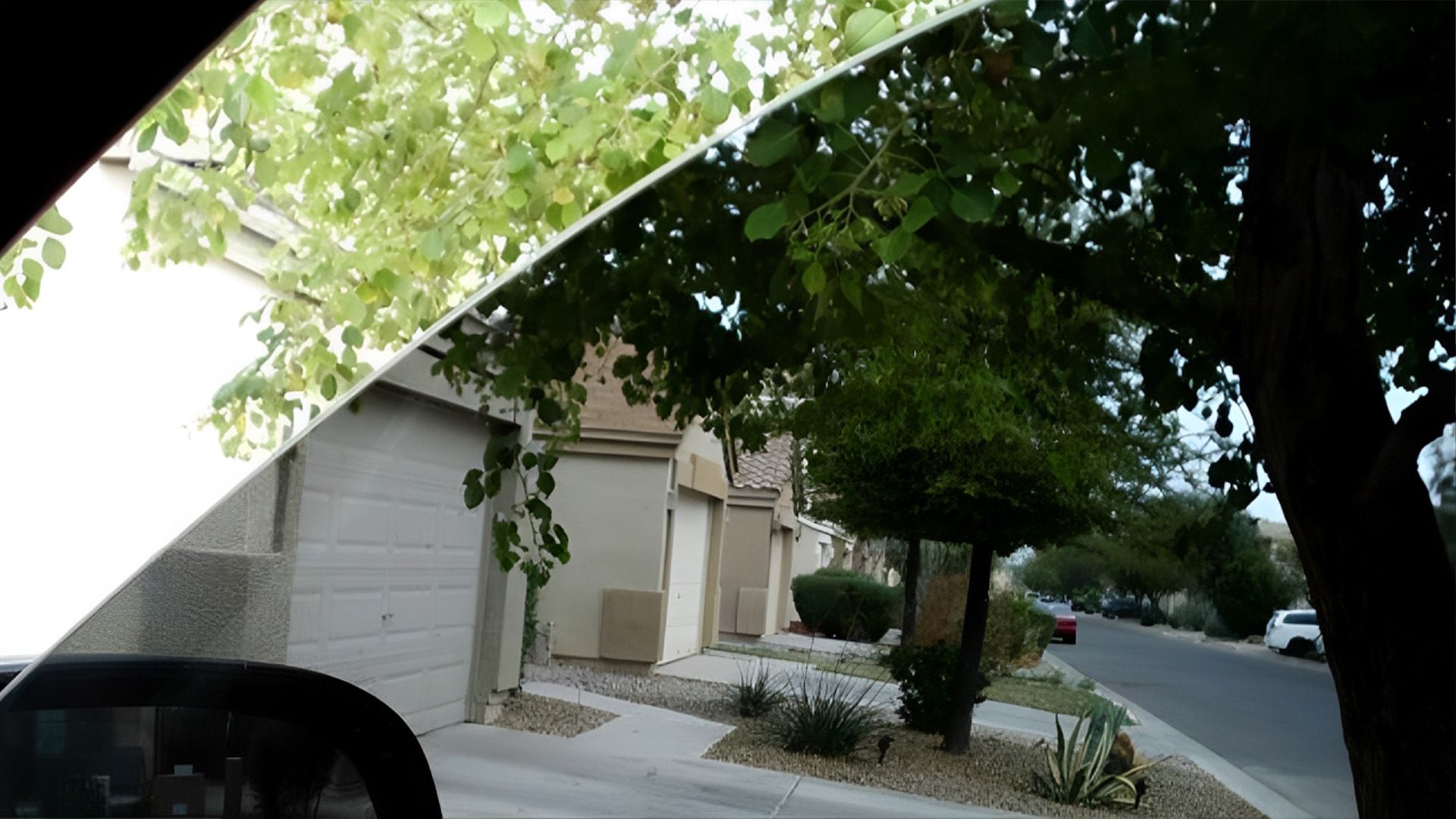
Ceramic tint is particularly well suited to:
Paint correction costs typically range from $650 for one-step prep to $800 to $1,100 for two-stage correction, depending on vehicle size and paint condition. The process removes swirl marks, scratches, oxidation, and water spots by leveling the clear coat through controlled machine polishing. Pricing varies by correction stage because each additional pass requires more labor, product, and inspection time.
Key Takeaways
- One-step paint correction costs $650 and typically addresses 50% to 65% of visible defects on new or lightly defected vehicles.
- Two-stage correction costs $800 to $1,100 by vehicle size and can address 75% to 85% of visible defects when clear coat depth allows.
- Paint condition determines the appropriate correction stage: light defects often respond to one-step work, while heavier damage typically requires two passes.
- Ceramic coating applied after paint correction can extend surface protection from 1 to 7 years, depending on the tier selected and maintenance schedule.
- Louisiana's heat, humidity, and UV exposure can accelerate oxidation, fading, and swirl-mark development, making proper paint correction and protection particularly valuable.
Paint Correction Cost Overview: What to Expect in 2026
Paint correction starts at $650 for one-step prep and ranges from $800 to $1,100 for two-stage correction based on vehicle size. The service costs more than a standard detail because machine polishing removes a controlled amount of clear coat to level surface imperfections. Paint condition, vehicle size, and the correction level determine which package is appropriate.
| Correction Level | Typical Price | Best Fit | Typical Result |
|---|---|---|---|
| One-Step Prep | $650 | New or lightly defected vehicles | Gloss restoration and moderate defect reduction |
| Small Two-Stage | $800 | Compact cars and coupes | Deeper correction and improved clarity |
| Medium Two-Stage | $1,000 | Sedans and mid-size crossovers | Higher defect removal and paint clarity |
| Large Two-Stage | $1,100 | Trucks and full-size SUVs | Deeper correction across larger panels |
Vehicle size affects pricing because larger vehicles require more working area, product, pad changes, and labor. Paint condition also determines whether a one-step or two-stage process is appropriate. Drivers comparing paint correction in Mandeville with other detailing upgrades can use these fixed tiers as a starting point before a professional paint inspection.
What Is Paint Correction and How Does It Work?
Paint correction removes surface-level paint defects by using controlled machine polishing to level the clear coat. The process targets swirl marks, light scratches, oxidation, water spots, and other types of paint defects that remain within the clear coat. Unlike wax or glaze products that can temporarily mask defects, correction changes the surface itself and can permanently remove defects when sufficient clear coat remains.
A professional correction begins with:
- Paint inspection: The technician evaluates the condition of the finish and identifies defects.
- Decontamination: The vehicle is washed and chemically decontaminated before polishing.
- Paint assessment: Paint depth and condition help determine how aggressively each panel can be corrected.
- Machine polishing: Compounds and cutting pads remove defects from the clear coat.
- Finishing: Finer polishing steps refine the surface and restore clarity.
- Final inspection: The finish is inspected to verify the correction and overall appearance.
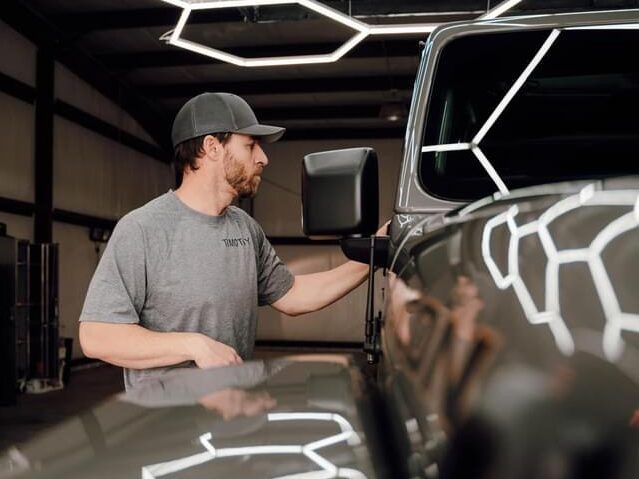
Inspection lighting and, when appropriate, a paint depth gauge help technicians balance defect removal with clear coat preservation.
How Much Does One-Step Paint Correction Cost?
One-step paint correction costs $650, making it the entry-level correction option for new or lightly defected vehicles. The service is designed for light to moderate imperfections and provides a noticeable improvement in gloss without the labor required for multiple correction stages.
The one-step package includes:
- Decontamination bath
- Detailed wash
- Clay treatment
- One-step paint preparation polish
- Two-step preparation wipe
- Final inspection
The process typically takes 2 to 4 hours and can address approximately 50% to 65% of visible defects, depending on paint condition.
Compact cars and coupes are generally well suited to this correction level, although vehicle condition remains the deciding factor.
How Much Does Two-Stage Paint Correction Cost?
Two-stage correction costs $800 for small vehicles, $1,000 for medium vehicles, and $1,100 for large vehicles. This correction level is designed for vehicles with moderate to heavy swirl marks, oxidation, water spots, and scratches that require more than a single polishing pass.
The service typically takes 4 to 8 hours and can address approximately 75% to 85% of visible defects when the paint condition allows. The package includes a detailed wash, chemical decontamination, clay bar treatment, mineral deposit removal, two-stage machine polishing, and final inspection.
"A proper two-stage correction is where most daily drivers in South Louisiana see the biggest jump in gloss and clarity." Kleentech Detailing Team, Auto Detailing Specialists, Mandeville, LA.
For many daily-driven vehicles, two-stage correction provides the strongest balance between correction depth, labor, and final appearance. Larger vehicles may require additional time because of their surface area, but fixed pricing keeps the standard tiers predictable.
What Is Three-Stage Paint Correction?
Three-stage paint correction is a custom process rather than a standard catalog package at most shops. The approach is generally reserved for heavily neglected finishes, severe oxidation, deeper defects, or vehicles where a higher level of refinement is required after the initial cutting stage.
In the broader detailing industry, three-stage correction can take 8 to 20 hours depending on vehicle condition and the number of polishing stages required. The actual correction potential depends on clear coat thickness and defect depth, so a paint inspection should determine whether additional correction is safe before multiple aggressive passes are attempted. Owners whose vehicles fall outside the standard one-step or two-stage scope can request an assessment to determine the appropriate correction plan.
What Factors Affect Paint Correction Cost?
Paint correction cost is primarily affected by vehicle size, paint condition, correction stage, and labor requirements. Larger vehicles require more working area, while heavily defected paint requires additional polishing work.
Vehicle Size
Larger vehicles generally cost more because trucks and full-size SUVs require more time, product, and labor than compact cars. Two-stage pricing reflects this difference: $800 for small vehicles, $1,000 for medium vehicles, and $1,100 for large vehicles.
Paint Condition
Paint condition determines whether one-step or two-stage correction is appropriate. Light swirl marks and mild haze may respond well to one-step correction, while moderate oxidation, water spots, and heavier defects generally require additional cutting and polishing.
Correction Stage
Each additional correction stage adds labor, product consumption, inspection time, and polishing passes. One-step correction typically targets 50% to 65% of visible defects, while two-stage correction can reach 75% to 85% when the paint has sufficient clear coat to support the work.
Geographic Location
Louisiana paint correction prices vary by market because labor costs, facility overhead, demand, and service models differ by location. Pricing remains consistent across the South Louisiana service area rather than varying by region or distance.
What Does the Paint Correction Process Include?
Paint correction techniques follow a controlled sequence that prepares the paint, removes defects, refines the finish, and verifies the final result.
The process generally includes:
- Washing
- Chemical decontamination
- Clay treatment
- Machine compounding or polishing
- Finishing
- Final inspection
Professional Products and Equipment
Detailers use machine polishers, cutting and polishing pads, compounds, finishing polishes, inspection lighting, and paint measurement equipment to control the correction process. Pad selection and compound strength are matched to the paint condition because a cutting pad removes more material while a finishing pad focuses on clarity and refinement.
Inspection is particularly important because different panels can respond differently to the same polishing combination. Professional correction therefore involves more than simply running a machine over the paint. The technician evaluates the finish before and during the process to balance defect removal with clear coat preservation.
How Much Does Paint Correction Cost With Ceramic Coating?
Paint correction is the preparation step before ceramic coating is applied, and the combined project ranges from $1,650 to $2,950 depending on the correction package and coating tier. The ceramic coating is applied after the paint has been corrected and refined, allowing the protective layer to preserve the finished surface rather than sealing existing defects underneath.
Ceramic coating cost for the Sb3 system ranges from $1,000 to $1,850 depending on the selected tier, with rated protection ranging from 1 year with Solo to 7 years with Trinity, and annual maintenance recommended to support the rated durability. For Louisiana owners considering ceramic coating in Mandeville, correction and coating are complementary services: correction improves the paint, while the coating provides longer-term surface protection.
Professional vs. DIY Paint Correction: Which Costs Less?
DIY paint correction usually costs less upfront, but professional correction reduces the risk of clear coat damage and inconsistent results. A DIY project requires more than a polishing kit because a suitable machine polisher, pads, compounds, inspection lighting, and other materials can quickly increase the total investment.
What Are the Risks of DIY Paint Correction?
DIY correction can cause clear coat damage, excessive material removal, holograms, or additional scratches when the machine, pad, compound, or technique is poorly matched to the paint. The risk is particularly significant because paint correction removes material from the clear coat, and an inexperienced operator may not recognize when a panel is approaching an unsafe correction limit.
Professional correction also saves significant labor time because technicians already have experience evaluating paint hardness, selecting polishing combinations, and identifying when a panel needs more or less correction. For expensive vehicles or finishes with limited clear coat, the cost of professional work can be easier to justify than correcting a DIY mistake later.
What Are the Benefits and Limitations of Paint Correction?
Paint correction improves gloss, clarity, and overall finish appearance by permanently removing suitable surface defects rather than simply hiding them. Corrected paint can look deeper and more uniform, particularly when swirl marks, oxidation, and water spots have reduced the finish's clarity.
However, paint correction cannot safely remove every defect. Deep scratches that penetrate beyond the clear coat, paint chips, base coat damage, and areas requiring bodywork generally need a different repair method. Paint thickness and defect depth determine how much correction is safely possible.
How Should Paint Be Maintained After Correction?
Corrected paint requires careful washing and appropriate protection to preserve the finish and reduce the chance of new defects. Owners can help preserve corrected paint by:
- Using a careful two-bucket wash method.
- Washing with clean microfiber towels.
- Avoiding abrasive automatic car-wash brushes.
- Keeping the surface properly protected.
- Following the maintenance requirements of any ceramic coating applied.
Ceramic coating or paint protection film can add another layer of protection after correction, although neither makes the paint immune to scratches or environmental damage. Louisiana's heat, humidity, UV exposure, road grime, and environmental fallout make consistent maintenance particularly important for preserving a corrected finish.
What Should Louisiana Drivers Know About Local Paint Correction Pricing?
Kleentech Detailing provides paint correction in Mandeville and mobile service throughout South Louisiana, including Hammond, Covington, Madisonville, Abita Springs, Lacombe, Baton Rouge, New Orleans, and Folsom. The shop operates from 445 Asbury Drive, Mandeville, LA, while mobile service provides an alternative for owners who prefer correction at home or work.
Mobile Paint Correction vs. Shop-Based Service
Mobile paint correction offers convenience by bringing the service to a customer's home or workplace, while shop-based correction provides a controlled facility for more involved multi-stage work. The appropriate option depends on vehicle condition, correction scope, available workspace, and the owner's preference.
For standard correction packages, fixed pricing provides a predictable starting point regardless of whether the vehicle is located in Mandeville or another listed South Louisiana service area. Owners with heavily neglected finishes or custom correction requirements can request an assessment before selecting a correction level.
What to Do Next
Not sure whether your vehicle needs one-step prep or two-stage correction? Start by comparing the $650 one-step option with the $800 to $1,100 two-stage tiers, then use the vehicle's size and paint condition to narrow the appropriate package. A full breakdown of inclusions and what each level covers is available on paint correction services before you commit to a package.
FAQs About Paint Correction Cost
Does harder paint cost more to correct?
Harder paint can require more polishing passes and more aggressive compounds, which may increase labor time. Softer paint may respond more quickly to lighter correction methods. A professional inspection helps determine the appropriate combination before correction begins.
How long does paint correction take?
One-step paint correction typically takes 2 to 4 hours, while two-stage correction generally takes 4 to 8 hours. Larger vehicles, heavier defects, and custom correction requirements can increase the time required.
Why does stage count change the price?
Each additional correction stage increases labor, product use, polishing time, and inspection requirements. One-step correction typically addresses 50% to 65% of visible defects, while two-stage correction can reach 75% to 85% when paint condition allows.
Is paint correction the same as polishing?
Paint correction is more extensive than a basic polishing service because it uses controlled machine polishing to permanently remove suitable defects from the clear coat. Polishing can improve gloss, but correction focuses on leveling the surface and removing defects rather than simply improving temporary shine.
What does paint correction not fix?
Paint correction cannot safely remove deep scratches that extend through the clear coat, paint chips, or base coat damage. The process is limited by the amount of clear coat available and the depth of the defect. Damage beyond the clear coat generally requires repainting or body repair.
Is paint correction worth the cost?
Paint correction can be worth the cost when the goal is to permanently improve paint clarity rather than temporarily mask defects. One-step correction starts at $650, while two-stage correction ranges from $800 to $1,100, giving owners a defined price range based on correction depth and vehicle size.
About the Author
This article was written by the Kleentech Detailing Team, a group of auto detailing specialists based in Mandeville, Louisiana. Operating since 2016, the team serves vehicle owners across South Louisiana with paint correction, ceramic coating, paint protection film, window tinting, and mobile detailing. Kleentech holds a 5-star rating across more than 160 Google reviews from customers in Mandeville, Hammond, Covington, and the surrounding area.
Latest update: August 2026