Is Ceramic Window Tint Worth It for Louisiana Drivers?
Table of Contents
Ceramic window tint is worth it for most Louisiana drivers because quality ceramic film can reduce solar heat, block more than 99% of UV radiation, reduce glare, and maintain its appearance for years. Non-metallic ceramic film also avoids the signal-interference concerns associated with some metallized films. This guide compares ceramic, dyed, carbon, and metallized tint by performance, cost, durability, and Louisiana VLT requirements.
Key Takeaways
- Global Ceramic QP Film provides more than 99% UV rejection and up to 76% NIR blocking at 1025 nm, depending on shade.
- Dyed film is generally a lower-cost option focused on shade, privacy, and appearance, while performance varies by product.
- Metallized tint can interfere with GPS, cellular service, and radio reception in some vehicles.
- Ceramic tint combines strong solar control with a non-metallic construction and long-term color stability.
- Kleentech Detailing uses Global Ceramic QP Film and serves drivers throughout South Louisiana.
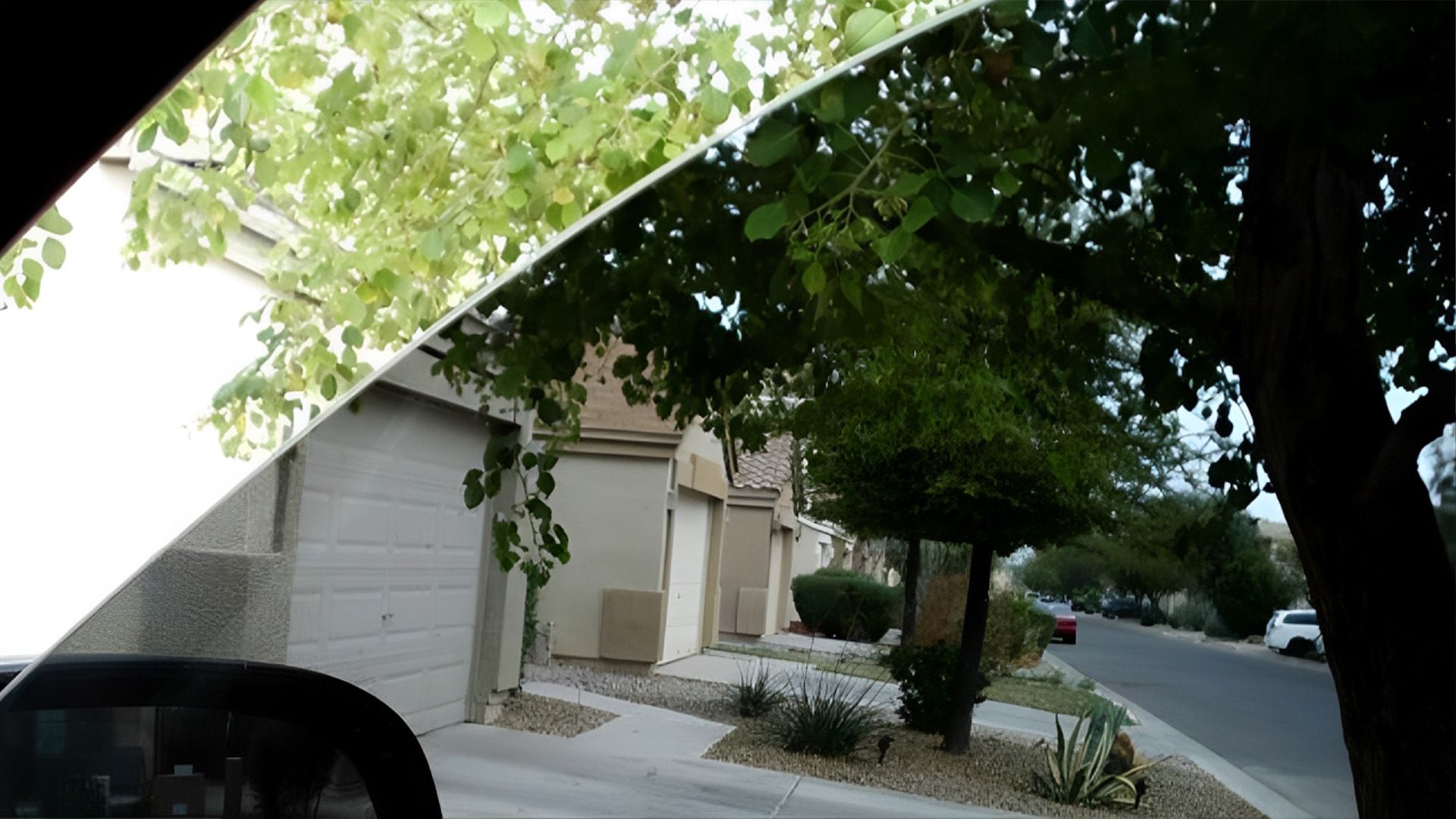
What Makes Ceramic Window Tint Different from Regular Tint
Ceramic window tint uses ceramic particles to control solar energy, while dyed tint relies primarily on a dyed layer for shade and privacy. This difference gives ceramic film stronger performance for solar control, UV protection, and long-term color stability. Dyed tint remains a practical option for drivers who mainly want improved appearance, privacy, and a lower upfront cost.
Metallized tint uses a thin metal layer to provide heat and UV protection, but that layer can interfere with GPS, cellular, or radio signals in some vehicles. Non-metallic ceramic film provides solar protection without that potential interference, making it a better fit for modern vehicles that rely on multiple wireless, navigation, and communication systems.
For drivers in Mandeville and surrounding South Louisiana communities, Kleentech Detailing uses Global Ceramic QP Film for customers looking for reliable solar protection without a metallic layer. The film combines the benefits of ceramic technology with a non-metallic construction suited to today’s connected vehicles.
Heat Rejection and Infrared Protection: The Biggest Performance Gap
Understanding how window tint works at the material level matters here: infrared blocking and total solar energy rejection are separate measurements that vary by film and shade. Global Ceramic QP Film lists up to 76% NIR blocking at 1025 nm on several shades, while total solar energy rejection varies by shade. This makes product-specific specifications more useful than applying one heat-rejection percentage to every ceramic film.
The difference becomes especially noticeable during Louisiana summers, when direct sunlight can quickly heat a parked vehicle. Ceramic film helps limit solar energy passing through the glass, which can make the cabin more comfortable and reduce the amount of heat the air-conditioning system must overcome. The actual result depends on the selected shade, factory glass, window orientation, vehicle interior, and weather conditions. That is why ceramic tint can be particularly valuable for daily drivers in Mandeville, Hammond, Baton Rouge, and other hot South Louisiana areas.
UV Protection and Interior Preservation Benefits
Ceramic window tint can block more than 99% of UV radiation, helping reduce prolonged ultraviolet exposure inside the vehicle. Global Ceramic QP Film lists UV transmission below 1%, which corresponds to
more than 99% UV rejection. That protection can help limit sun-related deterioration of dashboards, upholstery, leather, and other interior materials over time.
Ceramic tint can help protect several interior areas from prolonged UV exposure:
- Dashboards: Helps reduce UV-related fading and deterioration.
- Upholstery: Helps limit prolonged ultraviolet exposure through the glass.
- Leather: Helps reduce sun-related fading and drying.
- Vehicle occupants: Reduces UV transmission through the tinted glass.
Louisiana drivers face significant sun exposure throughout the year, particularly when vehicles are parked outdoors for extended periods. Ceramic tint can help slow fading, drying, and other forms of UV-related interior wear, although it cannot prevent all aging or damage. Drivers who already invest in paint protection film in Mandeville or auto detailing in Mandeville often choose ceramic tint for the same long-term preservation goal, but on the vehicle's glass and interior.
Durability and Longevity: 10+ Years vs. 3-5 Years
High-quality ceramic tint is designed for long-term color stability, while lower-grade dyed film may fade, discolor, bubble, or peel sooner. The exact lifespan depends on the film manufacturer, installation quality, vehicle exposure, glass condition, and maintenance. For that reason, a 10+ year lifespan is best treated as a potential service-life benchmark for quality ceramic film rather than a guarantee for every installation.
Dyed tint can develop a purple appearance as it ages, while premium ceramic film is engineered to maintain its appearance for much longer. Ceramic tint also should not be confused with dedicated security film: standard automotive ceramic tint is primarily designed for solar and UV control, not maximum glass protection. For owners who keep their vehicles for several years, the combination of durability, appearance, and solar performance can make ceramic a stronger long-term investment than replacing lower-cost film more frequently.
Clarity, Glare Reduction, and Night Driving Visibility
Ceramic window tint can reduce glare while maintaining a clean, non-reflective appearance, with the final balance between glare reduction and visibility depending on the selected VLT. Global Ceramic QP Film offers different shades and published glare-reduction levels, allowing the film to be selected according to the vehicle, glass position, and desired appearance.
Dyed film can create a darker appearance without necessarily providing the same solar performance, while ceramic film offers a cleaner look without the reflective appearance associated with many metallized films. Lower glare can make bright driving conditions more comfortable, but darker tint is not automatically better for nighttime visibility. The appropriate shade should balance privacy, glare control, visibility, and Louisiana's legal VLT requirements.
Ceramic vs. Dyed vs. Carbon vs. Metallized: Complete Tint Comparison
Ceramic tint offers the strongest overall balance of solar performance, UV protection, durability, appearance, and electronic compatibility among the four common film categories.
| Film Type | Heat / Solar Performance | UV Protection | Signal Interference | Durability | Appearance |
|---|---|---|---|---|---|
| Ceramic | High, with up to 76% NIR blocking at 1025 nm on Global QDP Ceramic | 99%+ | None from metal layer | Long-term color stability | Sleek, non-reflective |
| Dyed | Basic to moderate, product-dependent | Product-dependent | None from metal layer | Lower than premium ceramic on many products | Basic dark shade |
| Carbon | High, product-dependent | High, product-dependent | None from metal layer | Good | Matte finish |
| Metallized | Moderate to high, product-dependent | High, product-dependent | May affect GPS, cellular, or radio | Good | Reflective, shiny |
Carbon tint is a solid compromise for drivers who want better performance than basic dyed film without moving to ceramic pricing. Metallized tint can still provide strong solar and UV performance, but signal-interference concerns make it less attractive for vehicles with modern navigation and communication systems. Ceramic's main advantage is its combination of strong solar control, non-metallic construction, clean appearance, and long-term stability.
Cost Analysis: What Ceramic Window Tint Costs vs. Standard Film
Ceramic window tint costs more upfront than dyed film because premium ceramic products use more advanced materials and are designed to deliver stronger solar and UV performance. The actual price varies according to vehicle size, number of windows, windshield coverage, film selection, and installation requirements. Cost per year can be a useful comparison for owners who plan to keep their vehicles for several years, but the calculation should use the actual film warranty and expected service life rather than assuming every ceramic or dyed film has the same lifespan.
Kleentech Detailing installs Global Ceramic QP Film with pricing based on vehicle type and coverage. Current listed options include:
- Two front windows: $170
- Front windshield at 35%: $225
- 2-door car: $425
- Truck: $425
- 4-door car: $480
- SUV: Starting at $500
- Visor strip: $25
For a driver who plans to keep a vehicle long-term, the higher initial ceramic cost can make sense when stronger solar control, UV protection, and durability matter more than the lowest upfront price.
Who Should Choose Ceramic Window Tint: Ideal Use Cases
Ceramic tint is best suited to drivers in hot climates, owners of luxury vehicles, people with long commutes, and drivers who want strong solar protection without using a metallic film. Louisiana's combination of intense sun, heat, and frequent outdoor exposure makes solar control particularly valuable for daily-driven vehicles.
Ceramic tint is particularly well suited to:
- Daily drivers: Frequent exposure to Louisiana heat and sunlight increases the value of solar control.
- Long commuters: Stronger solar protection can improve cabin comfort during extended drives.
- Luxury vehicles: UV protection helps preserve expensive dashboards, upholstery, and leather interiors.
- Tech-heavy vehicles: Non-metallic construction avoids the signal concerns associated with some metallized films.
- Long-term owners: Durable film makes more sense when a vehicle is expected to remain in service for several years.
Dyed film can still make sense for budget-conscious owners whose primary goals are shade, privacy, and appearance. Ceramic becomes more compelling when the vehicle spends significant time outdoors, carries an expensive interior, or is expected to remain in service for several years. Cars, trucks, boats, and RVs can all benefit from appropriate ceramic film when the product and installation are matched to the application.
Professional Installation and Louisiana VLT Legal Requirements
Why Professional Ceramic Tint Installation Matters
Professional tint installation helps ensure proper film application and makes it easier to select a shade that works with both the vehicle's factory glass and Louisiana's VLT requirements. Factory glass already has its own light-transmission level, so a film labeled 25% may not produce a final 25% VLT reading when installed over that glass. The final combined VLT should therefore guide film selection.
Kleentech Detailing installs tint by appointment at 445 Asbury Drive, Mandeville, LA, and offers mobile service across South Louisiana, including Mandeville, Covington, Madisonville, Hammond, Abita Springs, Lacombe, Baton Rouge, New Orleans, Folsom, and surrounding communities.
Louisiana Window Tint VLT Requirements
Louisiana's current window tint requirements establish different VLT limits depending on the window position and vehicle application. The front-side-window requirement changed from 40% to 25% under Louisiana Act 143, effective August 1, 2025.
Key requirements include:
- Front side windows: At least 25% light transmission.
- Side window behind the driver: At least 25% light transmission.
- Rearmost windows: At least 12% light transmission.
- Sun-screening device reflectance: No more than 20%.
- Windshield: Non-reflective sun-screening material is subject to specific placement and size requirements, including the applicable 5-inch upper-area limitation.
Because factory glass and aftermarket film are measured together, the darkest legal film is not necessarily the film labeled with the lowest legal VLT percentage. Professional measurement and product selection can help prevent a film choice that appears compliant on paper but produces an out-of-range final reading.
Final Verdict: Is Ceramic Window Tint Worth It for Louisiana Drivers?
Ceramic window tint is worth the extra cost for most Louisiana drivers who prioritize heat control, UV protection, glare reduction, and long-term performance. Quality ceramic film can provide more than 99% UV rejection, substantial infrared and solar-energy control, and long-term color stability. Those benefits are particularly relevant in Louisiana, where vehicles routinely face intense sun and high temperatures.
The decision is even easier for drivers who want a non-metallic film that remains compatible with modern vehicle electronics. Ceramic tint provides a strong balance of comfort, appearance, solar protection, and durability, while dyed film remains the better choice when the lowest upfront cost is the primary concern. For drivers comparing ceramic window tint in Mandeville with other vehicle-protection upgrades, ceramic tint is best viewed as a long-term comfort and solar-protection investment rather than simply a darker shade of window film.
What to Do Next
Not sure which tint percentage fits your vehicle and Louisiana's VLT rules? Start by choosing a film based on your priorities. Ceramic or carbon film can provide stronger heat control, dyed film offers a lower upfront cost, and non-metallic film is a practical choice for modern vehicles with multiple electronic systems. Then, match the shade to your vehicle's factory glass, intended use, and legal VLT requirements. For professional guidance and installation in Mandeville and surrounding South Louisiana communities, explore Kleentech's window tinting services to find the right film and shade for your vehicle. Ready to upgrade your ride? Contact our team today for a free consultation and quote.
FAQs
What does ceramic window tint do better than dyed film?
Ceramic window tint generally provides stronger solar performance, UV protection, and long-term color stability than basic dyed film. Global Ceramic QP Film provides more than 99% UV rejection and up to 76% NIR blocking at 1025 nm on several listed shades. Dyed film remains a practical option when privacy, appearance, and lower upfront cost are the main priorities.
Does ceramic tint interfere with electronics?
Non-metallic ceramic window tint is designed to avoid the signal-interference concerns associated with some metallized films. Global QDP Ceramic uses non-metallic construction, making it suitable for vehicles equipped with GPS, cellular connectivity, and radio systems. This makes ceramic particularly practical for modern cars and trucks that rely on multiple wireless technologies.
How long does ceramic window tint last?
Quality ceramic window tint is designed for long-term color stability, but its actual lifespan depends on the product, installation, vehicle exposure, and maintenance. A 10+ year service life can be achievable with quality products and proper installation, but manufacturers' warranties and product specifications provide a more reliable benchmark for expected longevity.
Is ceramic tint worth the extra money in Louisiana?
Ceramic window tint is often worth the additional cost in Louisiana because strong solar control and UV protection address two major sources of vehicle heat and interior exposure. Global QDP Ceramic provides more than 99% UV rejection and substantial NIR and total solar-energy rejection, depending on shade. The additional upfront cost makes the most sense for long-term vehicle owners.
What tint type works best for tech-heavy vehicles?
Non-metallic ceramic window tint is an excellent choice for tech-heavy vehicles because it provides solar protection without relying on a metallic layer. Global QDP Ceramic uses non-metallic construction, making it a practical option for vehicles equipped with GPS, cellular connectivity, and radio systems. This combination provides solar control while maintaining a clean, non-reflective appearance.
What tint percentage is legal in Louisiana?
Louisiana currently requires at least 25% light transmission on front side windows and the side window behind the driver, while rearmost windows require at least 12%, subject to applicable statutory requirements and tolerances. Sun-screening devices may not exceed 20% luminous reflectance. The front-side-window requirement changed from 40% to 25% effective August 1, 2025.
About the Author
The Kleentech Detailing Team has been serving South Louisiana drivers from its studio at 445 Asbury Drive, Mandeville, since 2016. The team provides ceramic coating, paint protection film, window tinting, paint correction, mobile detailing, RV detailing, boat ceramic coating, and vinyl wrapping services. The team's hands-on experience across these vehicle-protection services informs the practical guidance published on this site.
Latest update: August 2026