How Much Does Boat Detailing Cost?
Table of Contents
What Extra Costs Come With Tint Removal and Windshield Tint?
Tint removal commonly costs $100 to $175 for a full vehicle, while individual window removal can cost about $30 to $40 per window.
Typical additional costs include:
- Full tint removal: $100-$175
- Individual window removal: $30-$40 per window
- Windshield tint: $60-$160
- Sun strip: Usually less than full windshield coverage
Existing film can increase the cost of a new tint installation because the old material must be removed and the glass cleaned before new film is installed. Brittle, bubbling, faded, or adhesive-heavy film can require additional labor.
New Paragraph
The cost to detail a boat typically ranges from $10 to more than $125 per foot, depending on boat size, condition, service scope, and the level of restoration required. Basic wash and wax services cost less, while oxidation removal, gel coat restoration, polishing, and ceramic coating can increase the total significantly.
Key Takeaways
- Boat detailing typically uses per-foot pricing, although some providers use flat-rate or hourly pricing.
- Basic wash and wax services commonly range from $10 to $20 per foot.
- A 20-foot boat may cost $200 to $400 for basic care and $800 to $1,500 for a full detail.
- Gel coat restoration can reach $75 to $125 per foot when oxidation and surface damage require extensive correction.
- Mobile detailing may use $50 to $100 per hour when access, setup, or working conditions make per-foot pricing impractical.
How Much Does It Cost to Detail a Boat?
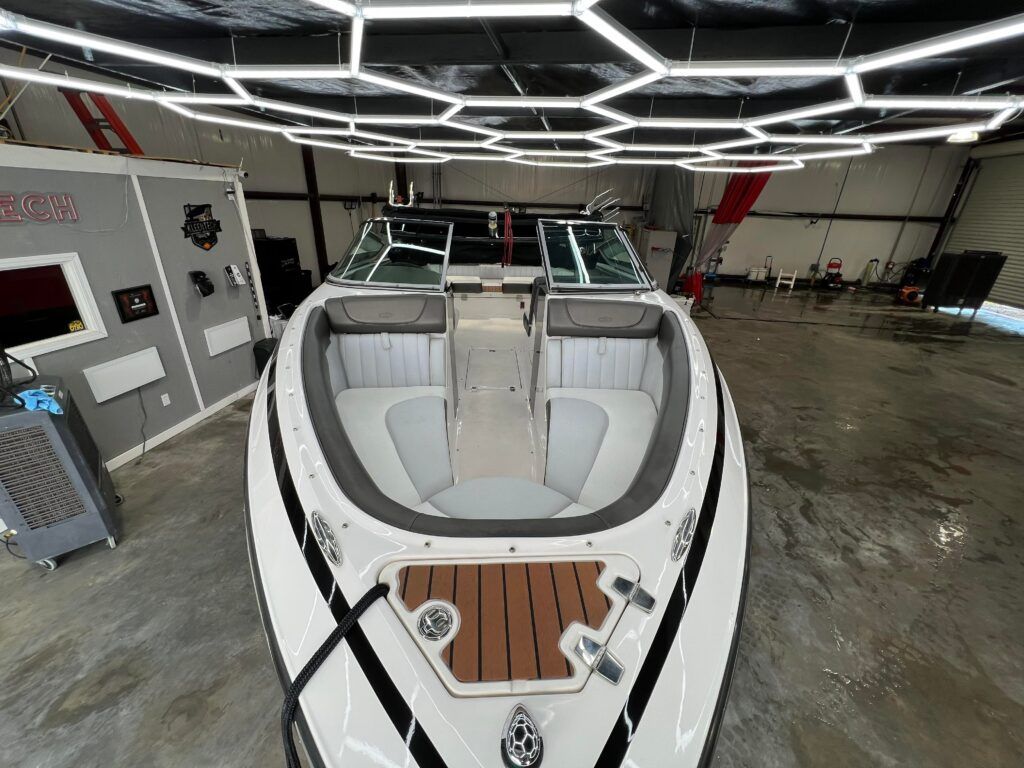
Boat detailing cost typically ranges from $10 to more than $125 per foot, depending on the service level and condition of the vessel. Basic maintenance may use lower per-foot rates, while heavy oxidation removal and gel coat restoration can reach the higher end. Some providers also use flat-rate pricing for simpler services or hourly pricing for difficult jobs.
A 20-foot boat may cost $200 to $400 for basic care and approximately $800 to $1,500 for a full detail. A 30-foot boat can exceed $3,000 when extensive restoration is required.
The largest price differences usually come from service scope, boat condition, and size. Comparing routine maintenance with restoration work helps explain why quotes can vary significantly between boats of similar length.
What Factors Change Boat Detailing Cost?
Boat size, condition, service scope, and accessibility are the main factors that determine boat detailing cost.
| Cost Factor | How It Affects Price |
|---|---|
| Boat size | Larger vessels require more surface area, product, and labor |
| Boat condition | Oxidation, stains, mildew, and heavy buildup increase preparation time |
| Service scope | More cleaning, correction, and protection steps increase the total |
| Gel coat condition | Chalky or faded surfaces may require compounding and polishing |
| Accessibility | Difficult dock, marina, or home access can increase setup and labor time |
| Service frequency | Regular maintenance can reduce the amount of restoration needed |
| Add-on services | Ceramic coating, teak care, and other specialty services increase the final price |
Condition can have a particularly large effect on labor. A well-maintained boat may only need washing, polishing, and protection, while a neglected vessel may require multiple correction stages.
Accessibility also matters when the detailer must work around limited dock space, restricted equipment access, or difficult setup conditions. These factors can add labor even when the boat itself is relatively small.
How Does Per-Foot Pricing Work for Boat Detailing?
Per-foot pricing multiplies the boat's length by a fixed rate, making vessel size a direct component of the detailing quote.
For example, a $15-per-foot service on a 20-foot boat would produce a base price of $300 before additional services or condition-based charges. At $50 per foot, the same boat would have a $1,000 base price.
| Pricing Model | Typical Range | Common Use |
|---|---|---|
| Basic per-foot pricing | $10-$20 per foot | Washing, basic cleaning, and wax |
| Mid-range per-foot pricing | $20-$75 per foot | More extensive cleaning and correction |
| Restoration pricing | $75-$125 per foot | Severe oxidation and gel coat restoration |
| Flat-rate pricing | Varies | Defined wash, wax, or maintenance packages |
| Hourly pricing | $50-$100 per hour | Difficult access or unpredictable labor |
Per-foot pricing provides a useful starting point, but it does not always represent the final bill. Boat condition, included services, accessibility, and additional correction work can change the quote after inspection.
What Does a Full Boat Detail Include?
A full boat detail can combine exterior cleaning, surface correction, decontamination, and protection, with the exact scope varying by provider and package.
Depending on the service package, a full detail may include:
- Exterior washing
- Hull and gel coat cleaning
- Surface decontamination
- Compounding
- Machine polishing
- Wax or sealant application
- Mold and mildew treatment
- Teak cleaning or maintenance when included
- Trailer cleaning when included
- Surface protection
A full detail can take several hours or longer depending on boat size, condition, and service scope. Heavy oxidation, embedded contamination, and neglected surfaces generally require more labor than routine maintenance.
The term full detail does not describe one standardized service. Package scope can vary based on boat size, gel coat condition, required correction, and the level of protection included.
How Much Do Wash and Wax, Compound, and Polish Cost?
Wash and wax is generally the lower-cost detailing tier, while compounding and polishing increase the price because they require machine correction and additional labor.
| Service Tier | Typical Price | What It Does |
|---|---|---|
| Wash and Wax | $10-$20 per foot or around $199 flat | Basic cleaning and protective wax |
| Compounding | Higher than wash and wax | Corrects oxidation and deeper surface defects |
| Polishing | Usually follows compounding | Refines the surface and restores gloss |
| Wax or Sealant | Varies by provider | Adds a protective layer after preparation |
Compounding uses abrasive products and machine equipment to remove oxidation and other surface defects. Polishing follows when additional refinement is needed before applying wax, sealant, or another protection product.
The final cost depends on how much correction the gel coat requires. A lightly maintained surface may need limited polishing, while heavily oxidized gel coat can require multiple passes and significantly more labor.
How Do Oxidation Removal and Gel Coat Restoration Affect Price?
Oxidation removal costs more than routine washing because it requires surface correction rather than simple cleaning.
UV exposure can cause gel coat to become chalky, faded, or white. Removing this oxidation may require compounding followed by polishing to restore gloss and prepare the surface for protection.
| Condition | Typical Work Required | Pricing Effect |
|---|---|---|
| Light oxidation | Cleaning and light polishing | Moderate increase |
| Moderate oxidation | Compounding and polishing | Higher labor |
| Severe oxidation | Multiple correction stages | Significant increase |
| Heavy gel coat damage | Extensive restoration | Can reach $75-$125+ per foot |
Neglected boats generally cost more because correction work takes considerably longer than routine maintenance. The longer a surface remains exposed to UV, salt, moisture, and contamination, the more preparation may be required before protection can be applied.
How Do Boat Size and Condition Change the Final Bill?
Boat size determines the amount of surface being serviced, while boat condition determines how much labor that surface requires.
A 20-foot boat may cost $800 to $1,500 for a full detail, while a 30-foot boat can exceed $3,000 for extensive restoration. These ranges are not fixed rates because service scope and condition can substantially change the final quote.
Regularly maintained boats generally require fewer correction steps than neglected vessels. A maintained 30-foot hull, for example, may receive recurring exterior service at a much lower cost than a severely oxidized hull requiring compounding, polishing, and restoration.
How Does Mobile Boat Detailing and Accessibility Change Cost?
Mobile boat detailing cost depends partly on how easily the detailer can access the vessel, set up equipment, and perform the required work.
Home docks, marinas, and other locations can create different working conditions. Limited space, restricted water or power access, difficult positioning, and setup delays may increase labor time.
Some jobs with unpredictable labor requirements may use $50 to $100 per hour instead of a fixed per-foot rate. The pricing model can therefore change when accessibility makes it difficult to estimate labor from boat length alone.
What Add-On Services Increase Boat Detailing Cost?
Specialty services such as
ceramic coating, teak maintenance, and additional correction work can increase the total beyond a standard wash, wax, or full detail.
| Add-On Service | How It Affects Cost |
|---|---|
| Ceramic coating | Adds preparation and coating application labor |
| Teak maintenance | Requires separate cleaning, preparation, and treatment |
| Additional polishing | Adds machine correction time |
| Mold or mildew treatment | Requires additional cleaning and treatment |
| Trailer detailing | Adds another surface area to the service |
| Bilge or engine-area cleaning | Requires specialized cleaning and additional labor |
Ceramic coating generally costs more than wax because the surface must be thoroughly prepared before application. Larger boats can require several thousand dollars for coating when extensive preparation and multiple coated surfaces are included.
What Are Typical Price Ranges for 20-Foot and 30-Foot Boats?
Boat size provides a useful starting point for budgeting, but condition and service scope determine whether the final price stays near maintenance pricing or moves into restoration.
| Boat Size | Service Level | Typical Price Range |
|---|---|---|
| 20-foot boat | Basic care | $200-$400 |
| 20-foot boat | Full detail | $800-$1500 |
| 30-foot boat | Quarterly hull detailing | Around $550 |
| 30-foot boat | Full restoration | Over $3,000 |
A 20-foot boat with light contamination may remain near the lower end of its range, while a heavily oxidized vessel can require substantially more labor. The same principle applies to larger boats, where additional surface area magnifies the effect of restoration work.
Pricing Insight: Per-foot rates are most useful when comparing boats receiving the same service level. Comparing a maintenance wash with a restoration package can produce a large price difference even when vessel length is similar.
When Does Recurring Maintenance Cost Less Than a Full Restoration?
Recurring maintenance can cost less over time when it reduces the need for major oxidation removal, compounding, and gel coat restoration.
Regular washing, surface cleaning, and protection help prevent heavy buildup from accumulating between service visits. Bi-weekly or monthly maintenance may require fewer correction steps than a boat that has been neglected for months or years.
The exact savings depend on service frequency, boat condition, exposure, and maintenance requirements. The main pricing difference is that recurring maintenance spreads smaller amounts of labor across multiple visits instead of concentrating extensive correction work into one restoration project.
What to Consider Before Booking
Boat detailing costs depend on more than the length of the boat. Its condition, the amount of cleaning or correction needed, and the type of protection you want can all affect the final price. A well-maintained boat may only need routine cleaning and protection, while oxidation, chalking, or neglected gel coat can require additional restoration work. When reviewing a quote, make sure you understand what is included and whether any extra labor or services apply.
If you’re in Mandeville or a nearby Louisiana community,
Kleentech Detailing can help you determine what level of
boat detailing makes sense for your vessel. Sharing the boat’s size, current condition, and the type of service you’re looking for can give you a clearer idea of what to expect before scheduling the work.
FAQs
How much does a basic boat wash and wax cost?
A basic boat wash and wax commonly costs $10 to $20 per foot, although some providers use flat-rate pricing. The final price depends on boat length, condition, included cleaning, and whether wax or additional surface preparation is included. Larger or heavily contaminated boats can require more labor even when the service is described as a basic wash and wax.
Why does oxidation removal cost more than washing?
Oxidation removal costs more because it requires compounding and polishing rather than routine cleaning alone. UV exposure can make gel coat chalky or faded, requiring machine correction before a protective product can be applied. Severe oxidation may require multiple correction stages and can reach $75 to $125 or more per foot.
What is included in a full boat detail?
A full boat detail can include exterior cleaning, surface decontamination, compounding, polishing, and surface protection, depending on the provider and package. Additional services may address oxidation, stains, mildew, or other gel coat conditions. Because package definitions vary, the exact scope of work should be confirmed before booking.
Does mobile boat detailing cost more?
Mobile boat detailing can cost more when accessibility or setup requirements increase labor time. Home docks, marinas, limited working space, and restricted utility access can affect how efficiently the work can be completed. Some difficult jobs may use hourly pricing of $50 to $100 instead of a fixed per-foot rate.
When is maintenance cheaper than restoration?
Recurring maintenance can cost less when it reduces the need for extensive correction work. Regular cleaning and protection can limit oxidation and heavy contamination, while neglected boats may require compounding, polishing, and gel coat restoration. The cost difference depends on boat condition, service frequency, exposure, and the amount of correction required.
About the Author
This article was written by Kleentech Detailing, an automotive and marine detailing company serving Louisiana. The team creates practical content based on its industry experience with boat detailing, exterior care, paint and gel coat protection, surface correction, and vehicle care.
Last updated: September 2026